I had the great good fortune in April of meeting choreographer Cathy Marston for a brief interview. She was in town for the premiere of her ballet Snowblind as part of San Francisco Ballet’s Unbound festival. It was extremely lovely of her to make the time to meet with an upstart blogger just days before the premiere.
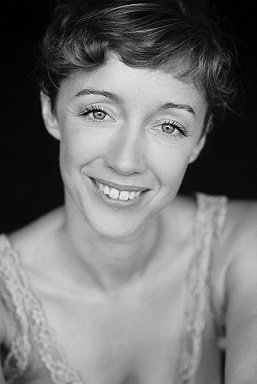
Ms. Marston participated in a lecture series that SFB held last August that I attended. At the time, she talked a bit about this new ballet, which is based on Ethan Frome, by Edith Wharton. Ms. Marston has done a lot of narrative work, including ballets of Jane Eyre, Wuthering Heights, Dangerous Liaisons, and The Suit. And of the 12 new ballets that SFB commissioned for Unbound, Ms. Marston’s is the only narrative.
I like story ballets. One act or full-length, I like a plot, or at least characters whose story I can become invested in. And so I wanted to talk to Ms. Marston about her work, which is frequently story-driven.
She has always been interested in stories, Ms. Marston says. As a dance student, she would annotate the RAD (Royal Academy of Dance) syllabus before exams, literally writing out what meaning she wanted to try to convey. “Dance is about the expression for me, not the athleticism. I’m not interested in abstraction as such—I need to know what it’s about.” As a choreographer, she has created works both narrative and not, but increasingly her commissions are for narrative, which she finds is an international trend. “I was a bit surprised to find so much demand for narrative in America,” she said, “as I tend to think of American audiences preferring mixed bills—the Balanchine model.” San Francisco Ballet usually presents three full-length ballets out of the eight programs they do each season. To the chagrin of many artistic directors, full-lengths—which are almost exclusively stories—continue to be where the money is. From my perspective, story ballets offer the comfort, and therefore safety, of familiarity. For Ms. Marston, her take is that when watching a story ballet, “You know where you are, but you can still be surprised.”
Because translating a story doesn’t have to be literal. In her eyes, there are lots of ways to tell stories. Ms. Marston prefers not to rely solely on set pieces and props, instead asking, “How much can we challenge the audience to imagine?” by creatively using simple objects and bodies to make meaning in dance. For example, in Snowblind, she uses the corps as the snow itself. In The Suit, the group served as a Greek chorus, actively advancing or commenting on the plot. Most stories only have a handful of key characters, but the corps can be used to “amplify or counterpoint what’s going on in the story.” This is true even of the classics—in Swan Lake, Odette is the main role, but the corps behind her quite literally amplifies the plight of the swan maidens. Ms. Marston, formerly Artistic Director of Bern Ballett in Switzerland, has worked extensively in Europe, especially in Switzerland, Germany, and Austria. She talks a lot about Regietheater, which translates to “director’s theater,” and basically means theater that works serve the director’s vision, as opposed to the writer’s (or original work’s source). This opened her eyes to other ways of approaching a dance adaptation. She uses costumes as an example: “Why does a ballet [based on a book such as Ethan Frome] need to be ‘period’?” The voluminous skirts we associate with many story ballets hide so much movement. To what end? It’s not necessary. Ms. Marston has found a freedom, I think, in this break. Her ballets stand as works of art separate from their origins. “I’m on a journey,” she says, “of exploring this approach to narrative.”
At the end of our conversation, Ms. Marston said that she has an interest in new stories that haven’t already been told in dance. Not remakes, in other words. She would love to make a ballet based on a brand new story—but points out that it’s not easy to find a writer to write a story the words of which will never be read. I think it’s a fascinating idea. Music scores are commissioned all the time. And for every new story ballet, a libretto is drafted. So why not commission a story? A whole story, fully fleshed out. I can picture theater program now, with a giant silver sticker that says, “Soon to be a New York Times bestseller!”
Snowblind, by Cathy Marston, appears on Program B of San Francisco Ballet’s Unbound festival together with works by Myles Thatcher and David Dawson
Looking for more information? You can jump to Ms. Marston’s website here, and follow her on Twitter @CathyRMarston and Instagram @cathyrmarston.
 Going to the Ballet
3 thoughts on “In Conversation with Cathy Marston”
Comments are now closed.