I spent five days in London recently, and went to the ballet four of those nights. Two of those were performances of The Royal Ballet’s new production of Swan Lake. I agonized over who to see and finally decided to go twice, once for the pairing of Lauren Cuthberston and Federico Bonelli and once to see Natalia Osipova and Matthew Ball. Unfortunately, Ms. Cuthbertson was injured and ultimately unable to perform during this run. Her performances were taken over by a relatively new principal dancer, Yasmine Naghdi. In the end, I was glad to see it twice regardless of the casting, so that I could absorb the details of this version.
My initial reaction when I heard that the Royal was putting Liam Scarlett in charge of the choreography for their new Swan Lake was one of concern. While I liked his Frankenstein more than I expected to, this was Swan Lake. And the British press has not been particularly kind to Scarlett’s various attempts at full-lengths. But it was still going to be “after Petipa,” so there was reason to hope for the best.
First of all, it was a beautiful production. Set in the late Victorian era, the curtain opens on a park outside palace gates. The costumes and scenery for Act I were restrained but lovely. I was definitely coveting the court ladies’ swishy white-with-black-stripes dresses, and I loved the detail of all the men wearing hats at the very beginning. Act III, set inside the palace, was much more baroque, all golds and blacks and a heaviness that suggests the metaphorical weight of the crown. Contrast that with the dramatic austerity of the lakeside acts, with a large rock dominating the rear of the stage, and it’s no wonder Siegfried seeks solitude there. The company made much fanfare about the return of the tutu. In the previous production here, only Odette/Odile wore a classical tutu. The flock of swans were in shredded, more romantic-style tutus. This time around, all the swans were in classical tutus, as were the four foreign princesses brought in for the ball. The tutus certainly make it seem more traditional. They also take up a lot of room!
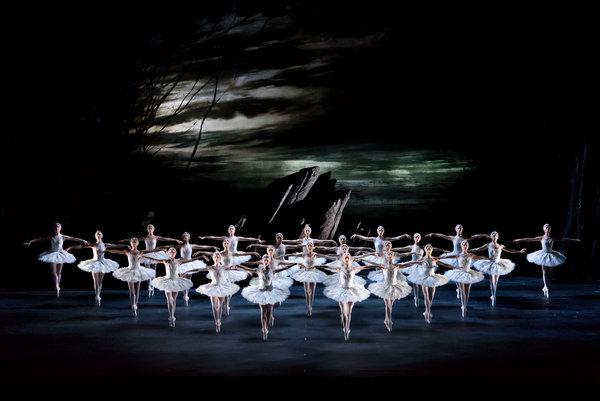
On Monday night, Ms. Naghdi did a very nice job as Odette/Odile. Her technique was solid and she imbued the role with a sort of innocent beauty. For me, what was missing was the emotional connection between her and Mr. Bonelli as Siegfried. Siegfried, incidentally, is a very muted character in this production. Dressed always in dark colors, he practically disappears in the lakeside scenes. This makes him unobtrusive, for sure, but isn’t this a love story between two people?
On Tuesday night, it was a thrill to see Ms. Osipova in the role. A product of the Bolshoi Ballet (school and company), her dancing is nothing like that of anyone else onstage. This ballet puts that difference to perfect use. In the role of Odette/Odile, she brought a naturalness and almost animal quality to the movement that put her in stark contrast to the finishing school princesses the Queen presents to Siegfried as potential brides. It’s no wonder that Siegfried is attracted to her—she’s completely unlike anyone he’s ever encountered at court.
Ms. Osipova did a few things completely differently from Ms. Naghdi (in particular the climactic fouettés in Act III—Ms. Naghdi did them with panache, whereas Ms. Osipova didn’t do them at all, instead tearing around the stage in a blazing fast circle of piqué turns), but her general approach was simply so different. It’s not even fair to compare the two. Her connection with Mr. Ball, as the prince, was more convincing. Mostly, though, what I became invested in was her story as the swan queen.
The ending Mr. Scarlett gave to this production is especially sad. (If you don’t want to know, you can skip the rest of this paragraph!) In most versions, Odette kills herself, with a despondent Siegfried following her to his own death. The idea is that they are reunited in death, and that is enough to make audiences happy for them, together forever in the afterlife. Here, though, only Odette dies. She jumps off the rocks and into the lake, but Siegfried remains behind. Only after Von Rothbart dies—or perhaps is merely rendered powerless, it’s not clear—is Siegfried roused from his grief by the two “big swans”. He runs to the lake, behind the rock, and returns, as the final notes play, carrying the body of Odette in his arms. It’s truly a sad ending, but not a tragic one. Somehow, this ending lacked the majesty that we associate with tragedy. It also lacked power in the staging for the swans in their final moments. Act IV is where Swan Lake has the ability to pack a real emotional punch, and for me it’s not so much in the death of Odette as it is in the freedom it grants the rest of the swans. I’ve seen productions that have the corps bowing down to a vision of Odette and Siegfried, thanking them for breaking the spell. Whether or not Siegfried dies, Odette makes the ultimate sacrifice. In her death, the swan corps regains life. It’s profound, and profoundly moving. And Scarlett’s ending didn’t deliver the intensity of feeling that I was hoping for.
On a more cheerful note, the happiest, brightest, and arguably best moment of this entire production occurs in Act III with the resurrected choreography of Frederick Ashton’s Neopolitan Dance. Wickedly difficult and fast, the couple brings a burst of joy to the party with their beribboned black and white carnival costumes and tambourines. And when, at the end of the dance, a pair of very proper footmen come out and play the tambourines for them, well, let’s just say the audience enjoyed a hearty laugh. The Neopolitans brought the house down.
Sitting up in the Amphitheatre, I had a great view of the patterns at play, and of the corps work, which was excellent. I want to make sure to give the swans the credit they deserve!
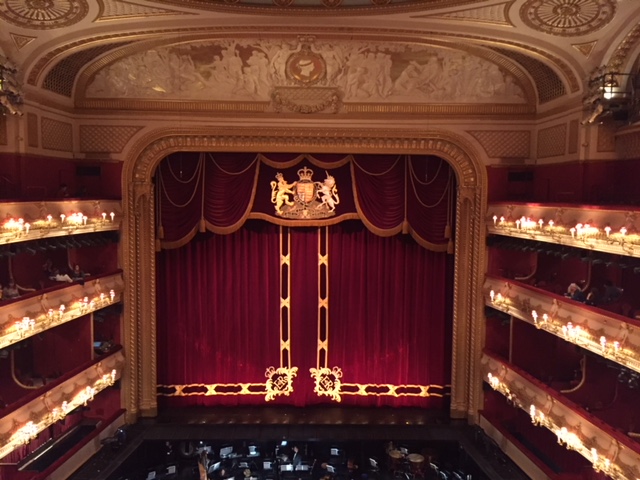
The Royal Opera House has made a huge commitment to broadcasting live performances in cinemas throughout the world. Swan Lake was shown live in the UK on June 12, but it’s being shown near me next month. So do be sure to check local listings! The cast is Marianela Nuñez and Vadim Muntagirov.
The Royal Ballet: Swan Lake
June 18, 2018, at 7:30 pm at the Royal Opera House
 Going to the Ballet
One thought on “Swan Lake”
Comments are now closed.